
Selling the Feeling: How Imperfection, Hype and Mystery Drive Modern Brands

Authors: Anushka Poddar & Daksh Kumar
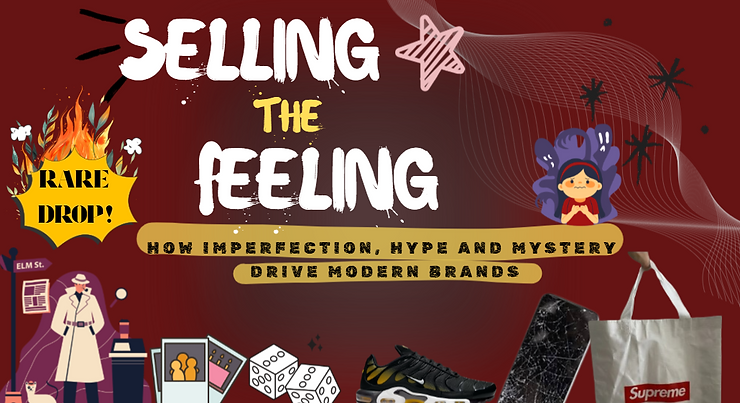
We Don’t Purchase Products, We Purchase Feelings
Think about the most recent item you bought, even though it was not really necessary. It might have been a trendy hoodie, a skincare product or some expensive food you’d seen on the internet. You likely didn’t get it because of its features. You bought it because of the way you felt in it. It was empowering, cool, special or included you. That's just how marketing works now.
Brands are no longer only selling products. They are selling vibes and moods. People don’t engage at a deep level with technicality or lengthy explanation. They engage with stories, emotions, and through experiences. It has utterly transformed how brands sell themselves, in particular to young consumers.
The emotional branding of today is all about three things: Imperfection, Hype and Mystery. These sound so simple but in fact they are very powerful precisely because of their deep connection with basic human psychology. Understanding how these elements work helps us understand the concept better.
From Products to Feelings
Earlier, marketing was straightforward. Brand discussed quality, price and utility. Ads could clearly explain why one product was superior to others. This approach was effective when markets were less crowded. They created a logical solution for their use. Nowadays, everything is more or less the same in their products. Most phones have good cameras. Most clothes look stylish. Most apps do similar things. As a result, attributes are not as discriminative. Brands had to find a new way to stand out.
That is when feelings became important. Modern brands focus on how they want people to feel when they use their product. A brand does not just ask, “What do we sell?” It asks, “What emotion do we create?” This emotional connection helps brands stay memorable and meaningful.
Why Emotions Influence Buying Decisions
Humans pride themselves on being rational, but nearly all buying decisions are actually emotional. We don’t think, then feel; we feel, then think. A person may only purchase high-priced shoes if they feel good wearing them. They might claim down the line that they did it for quality or comfort.
Brands know this behaviour all too well. Instead of using data to persuade consumers, they rely on emotion to draw them in. Once the emotional bond is established, buying feels like an organic next step.
For young consumers, emotions matter even more. Gen Z values authenticity, identity, and experiences. They want brands that understand their mood and speak their language. Emotional branding helps brands feel relatable rather than distant.
Imperfection: Why Being Real Matters
It used to be that brands wanted to appear perfect. Ads were slick, models impossibly perfect, messages meticulously crafted. Today, perfection often feels fake. Real life is messy, and people know it, and they want brands to as well.
Imperfection makes brands feel human. When a brand cuts to behind-the-scenes, unedited or real opinions, you’re just able to connect on a higher level. It’s not so much advertising as conversation.
Many brands now use simple visuals, casual language, and real people instead of professional models. Even small mistakes or self-jokes make brands more attractive. Imperfection creates trust because it shows honesty.
Why Imperfection Works with Gen Z
Young consumers have grown up seeing filtered images and unrealistic lifestyles online. Because of this, they value realness. Brands that pretend to be perfect often feel untrustworthy. On the other hand, brands that show vulnerability feel refreshing.
Imperfect branding also allows creativity and humour. Brands can make fun of themselves, respond casually in comments, and talk like real people. This breaks the formal image of traditional marketing and builds stronger engagement. By accepting imperfection, brands become more approachable. They stop acting superior and start acting human, which helps build long-term relationships.
Hype: The Way People Make People Want What Everyone Wants To Talk About
Hype is the buzz about a new product or brand prior to and during its launch. It builds anticipation and curiosity. Rain is pouring, but people are once again talking and sharing eagerly.
Hype works because humans are social creatures. When every other person is involved in a thing, we naturally want to belong. This is also associated with FOMO. If something feels scarce or exclusive people feel compelled to move fast.
Why Hype Feels So Powerful
Hype is also not about the product itself but the experience that comes with it. Being part of a trend can feel very exciting. There is a sense of belonging that comes with being part of a trend. Buying a hyped product can feel like one is part of a community.
Social media helps create hype quickly. One viral video can be enough to create a massive demand overnight. Often, the hype is larger than the actual product. The hype is what one always recalls. The usage of the actual thing is what one forgets.
Brands that successfully create hype turn launches into events. They make consumers emotionally invested even before the purchase happens.
Mystery : The Power of Not Revealing Everything
A mystery plays a subtle yet profound role in branding in the modern age. If a brand fails to reveal all its secrets, it generates curiosity in consumers. They become eager to know more.
Some brands have mysterious marketing campaigns with few details given out. Some others employ exclusive access, launch events, and secret communications. This is to give customers a sense of being special and included.
Mystery sells because consumers like discovery. When the consumer discovers something for themselves, it creates an even deeper link. Mystery prolongs consumer interaction and builds interest from an idea to enthusiasm.
Selling the Feeling, Not the Product
Each of the three imperfection, hype or mystery, serves one common purpose: putting up for sale the feeling. It is merely the instrument to provide the experience.
A fashion brand could sell confidence. A cafe could sell comfort. A travel brand could sell freedom. When consumers buy that feeling, they return again and again.
Today, branding is centred on experiences and not products. The above idea is crucial in building a relationship.
The Use of Social Media in Emotional Branding
The increasing use of social media has amplified the impact of emotional marketing. Videos, photographs, and music convey emotions instantaneously. Brands get only a few seconds to make an impression; therefore, emotional content outweighs informational content.
Social media has made brands storytelling brands. The aim is not to advertise or sell anymore. The aim is to relate. Modern brands are successful because they are human, not because they are flawless. Trust is built on imperfections. Excitement is produced by hype. People are captivated by mystery. When combined, these components assist brands in selling emotions rather than goods. People choose what appeals to them in a crowded market. And that's the true key to contemporary branding.
In conclusion, people are the future of marketing. Modern brands are successful because they are trying to be human, not because they are flawless. Trust is built on imperfections. Excitement is produced by hype. People are captivated by mystery. When combined, these components assist brands in selling emotions rather than goods. People choose what appeals to them in a crowded market, and that's the true key to contemporary branding.


Comments